Lift Too Small? 7 Checks to "Fly" an All-in-One Cabinet into a Hard-to-Reach Server Room
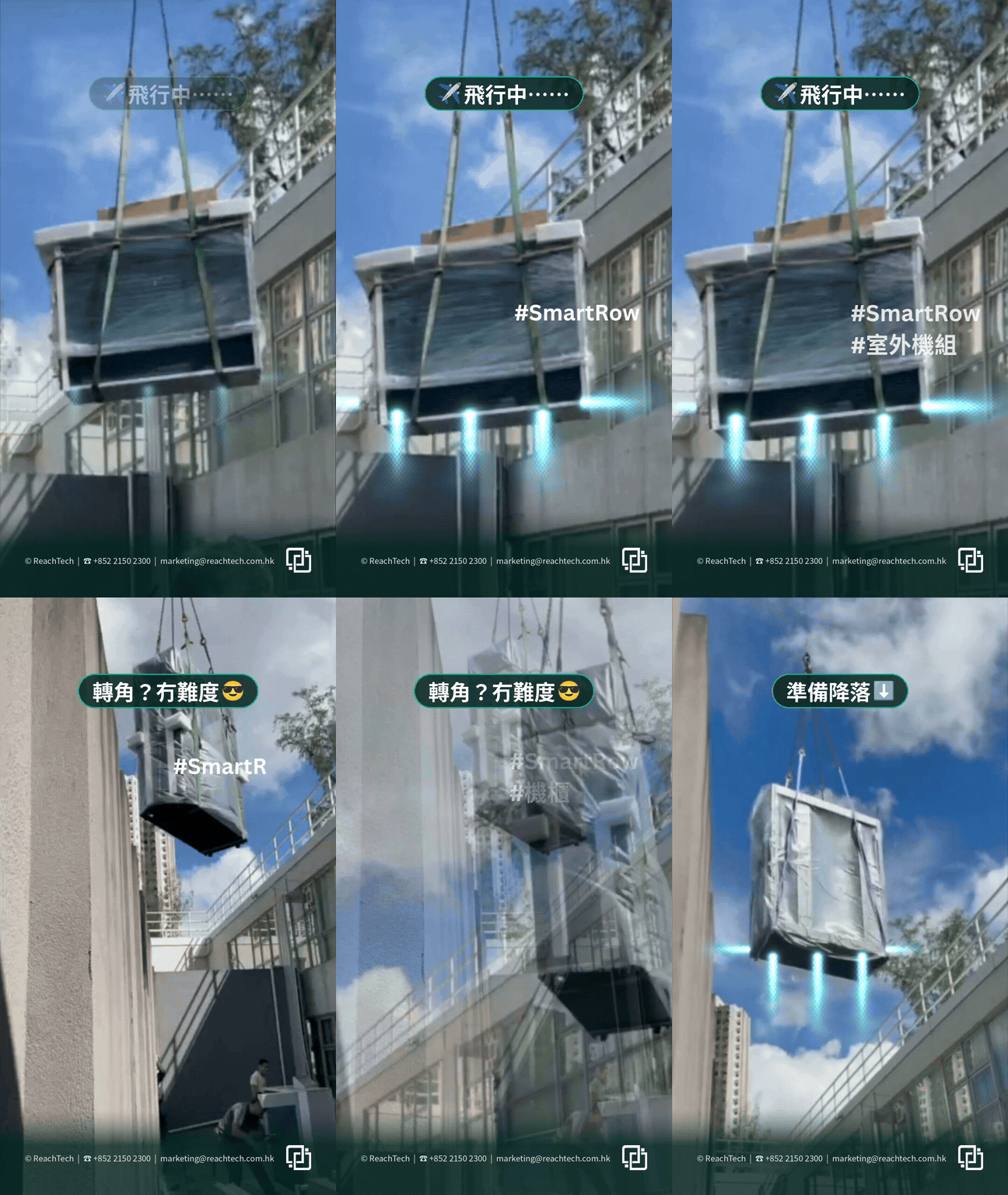
Everyone is talking about flying cars. Our racks have been "flying" for a while.
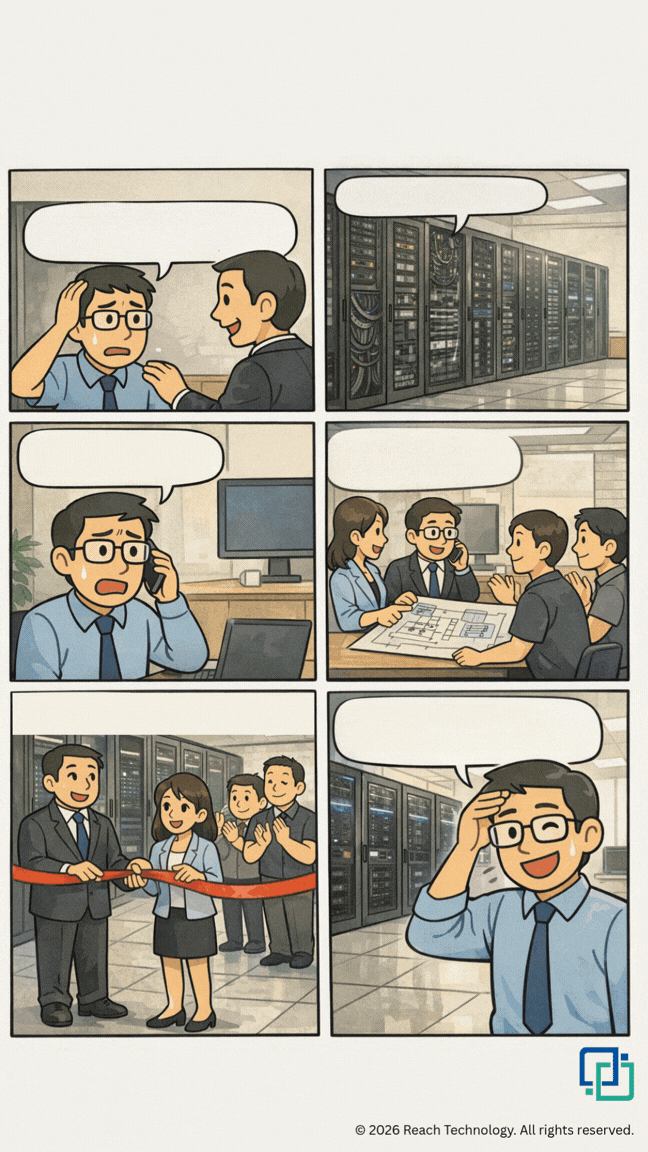
During an office relocation or server room upgrade, the hardest question is often not which cabinet to choose, but how to get it in. The lift door is too small, the corridor has too many corners, the delivery route winds around the building, and the server room itself is an awkward shape.
In our recent Tsuen Wan project, the equipment was lifted to the rooftop by crane rather than forced through the lift. A "flying rack" is not magic, though. It relies on careful measurement, route planning, lifting coordination and proper commissioning once the equipment lands.
Below are the seven most common problems when delivering racks into hard-to-access server rooms, and what to check at each step.
1. Site survey: measuring the room but not the route in
A common mistake is to measure only the space inside the server room. On delivery day, the team then finds that the lift door, a corridor corner or a door frame is too narrow, or that the floor loading was never assessed. A packed cabinet is usually larger than the cabinet itself, so a single tight point on the route can force the whole plan to change.
Suggestions:
Measure every stage from the building entrance to the room: lift door, lift car, corridor width, door frames and turning radius, using the packed dimensions
Confirm floor and roof loading, and assess loading before moving heavy equipment
Record the room shape, columns and door position to confirm the layout and service clearance
2. Hoisting, stairs or manual handling? Choose by the actual conditions
Not every project needs a crane. However, carrying a heavy cabinet up stairs by hand greatly increases the risk of injury and damage, while a crane lift needs a suitable crane position and a safe rooftop landing point. Choosing the wrong method often leads to delays or damaged equipment.
Suggestions:
Where indoor access is adequate, use the lift and suitable handling equipment such as a trolley, pallet jack or forklift
Where access is too tight or the stairs are too narrow or steep, assess a rooftop or window crane lift
Compare manpower, time, risk and protection measures for each method before deciding
3. Permits and building management: the step most often missed
Crane lifts and large deliveries usually involve the building management office, the landlord and other tenants. If the lift, loading bay or roof access is not booked early, and the people affected are not told, the team may be refused entry or have to reschedule on the day.
Suggestions:
Ask the management office early about its procedures, required documents and insurance for deliveries, lifting and roof access
If the crane needs to park on or occupy a shared or public area, confirm early whether approval from the landlord or the relevant authorities is required
Book the lift, loading bay and working hours, and notify affected tenants
4. Scheduling and risk: a clear plan for lifting day
When the crane, the delivery truck and the installation team are not coordinated, they end up waiting for each other, and both cost and risk rise. The Labour Department's Code of Practice for Safe Use of Mobile Cranes covers the management and planning of lifting operations, the responsibilities of personnel and the siting of cranes, and is a useful planning reference.
Suggestions:
Prepare a lifting-day timeline covering base preparation, truck arrival, lifting, placement and crane departure
Watch the weather and wind, and keep a backup date
Use a qualified lifting contractor, set up a cordoned-off area and assign a dedicated person to direct the lift
5. Protecting equipment in transit: a smooth flight needs a safe landing
Vibration, knocks and weather changes during transport and lifting can damage the cabinet and the equipment inside. Vertiv's VR rack guide, for example, advises inspecting the packaging for damage on receipt and using at least two people with a pallet jack or forklift to move the unit.
Suggestions:
Inspect the packaging and enclosure before and after transport and lifting, and record any damage straight away
Keep the original packaging and shipping brackets in place until the equipment reaches its final position
After transport through large temperature changes, follow ASHRAE TC 9.9 guidance on acclimatising equipment before powering on
6. Installation and commissioning: the real work starts after "landing"
Getting the equipment in place is only the first step. If the cabinet is not levelled and secured, or if power and cooling are not tested one by one before go-live, the room is more likely to suffer overheating, tripped power or difficult maintenance later.
Suggestions:
Level the cabinet according to the manufacturer's instructions, and secure it to the floor where required
Connect and test power, UPS, cooling and monitoring one by one, with reference to ASHRAE's recommended operating environment
Hand over only after full system testing and complete handover documents
7. Choosing an all-in-one cabinet for a hard-to-reach room
For SMEs, the server room is often a small, irregularly shaped room. An all-in-one cabinet integrates cooling, UPS, fire suppression, water protection and smart security into the cabinet system, reducing extra installation on walls and ceilings. When more than one cabinet is needed, a SmartRow solution groups several cabinets into a row that can be expanded as needs grow.
Suggestions:
Do not compare the cabinet price alone; include access, commissioning, downtime and reinstatement
Size the capacity for the next two to three years
For leased offices, include the reinstatement scope in the plan before the move
A hard-to-reach server room is no reason to give up on an upgrade. From site survey and route planning to hoisting, installation and commissioning, ReachTech coordinates the whole job end to end, so your all-in-one cabinet "flies" right where it belongs. Further reading: Lift Door Too Small? Corridor Too Narrow? An All-in-One Cabinet Can Still Go In
ReachTech professional scope
ReachTech provides data centre and server room infrastructure services, including a complimentary on-site assessment and an integrated proposal:
✅ Server room design and all-in-one smart cabinet solutions
✅ UPS power backup systems
✅ Precision cooling
✅ Complete office IT relocation
🤗 CONTACT US
☎️ +852 2150 2300
❇️ +852 5501 2625
References
Labour Department – Code of Practice for Safe Use of Mobile Cranes https://www.labour.gov.hk/eng/public/os/B/CoP_for_Mobile_Cranes_ENG.pdf
ASHRAE TC 9.9 – Mission Critical Facilities, Data Centers, Technology Spaces and Electronic Equipment https://tpc.ashrae.org/?cmtKey=fd4a4ee6-96a3-4f61-8b85-43418dfa988d
Vertiv – VR Rack Installer/User Guide https://www.vertiv.com/49839c/globalassets/shared/vertiv-vr-rack-user-guide-sl-11425.pdf
TechTarget – Data center design standards for cabinet and floor loading https://www.techtarget.com/searchdatacenter/tip/Data-center-design-standards-for-cabinet-and-floor-loading
ReachTech – Lift Door Too Small? Corridor Too Narrow? An All-in-One Cabinet Can Still Go In https://www.reachtech.com.hk/post/all-in-one-cabinet-narrow-lift-access